
Why Do I Push People Away? The Father Wound Most Men Don't Know They Carry
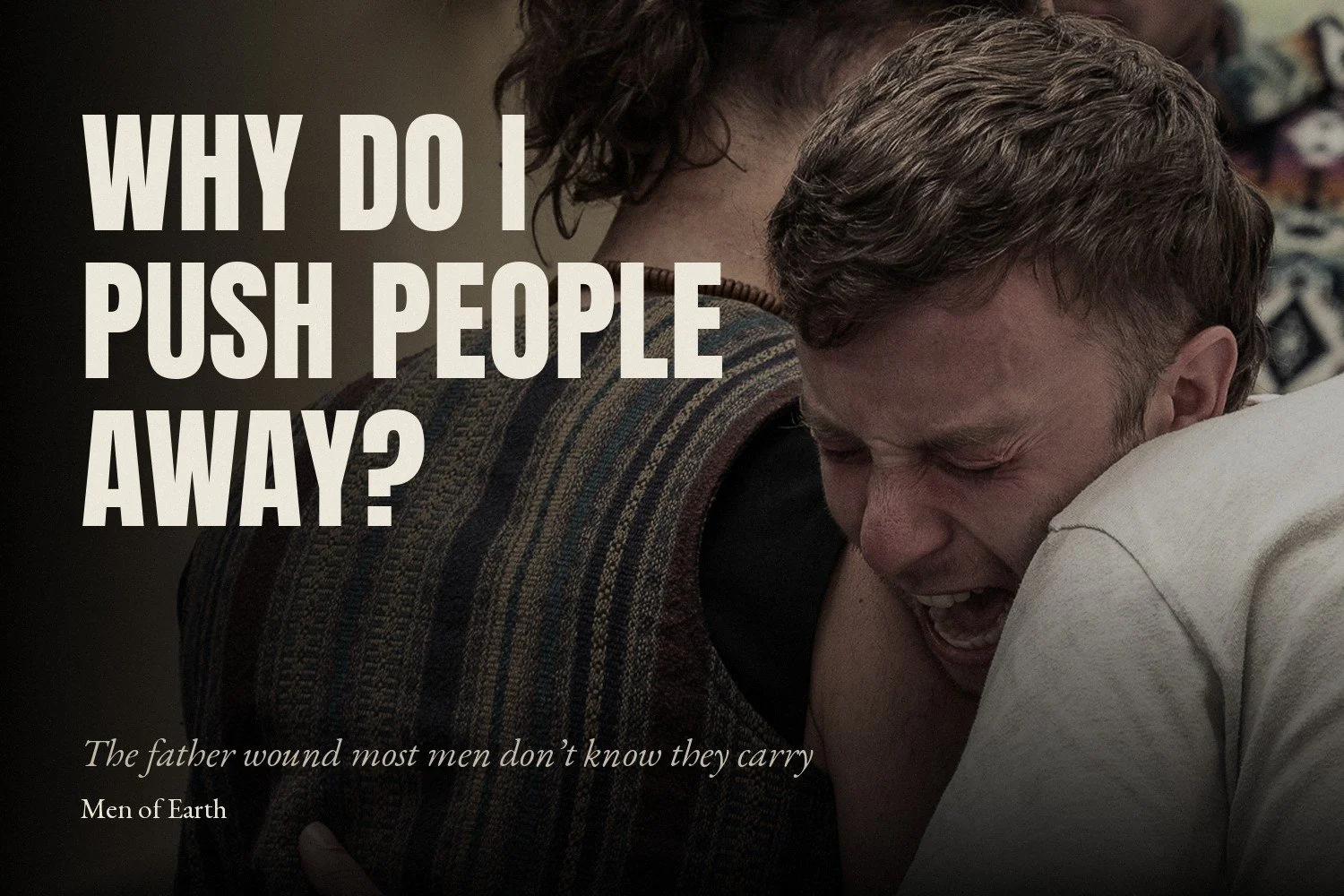
You keep people at arm's length. You'd rather handle things alone than ask for help. When someone gets close, part of you pulls back, or waits for them to leave.
Most men who push people away don't know why they do it. And most of them would never think to connect it to their father.
Nothing terrible happened. Dad was around. He worked hard and kept a roof over your head. So when someone uses the phrase "father wound," it sounds like it belongs to someone else, a man with a harder story than yours.
But you can't change what you aren't aware of.
What is a father wound?
A father wound is the set of patterns a man carries from growing up with a father who was absent, critical, abusive or unpredictable. These patterns live in how you love, how you protect yourself, and how you see your own worth.
It isn't a clinical diagnosis. It's a way of naming something many men feel but can't put words to: a quiet sense that something is missing, or that something is wrong with them, without knowing where it came from.
It doesn't take something dramatic
A wound isn't only made by what was done to you. It's also made by what never arrived.
Sometimes your father was there but unavailable. He was in the house but not really with you. So you learned to read the room before he ever learned to be himself around you.
Sometimes the words never came. I see you. You're enough. I'm proud of you. Or he said them, but his actions told a different story, and actions are what a child believes.
A father's role isn't only to protect and provide. It's to model how a man moves through the world: how he handles pressure, how he repairs after conflict, how he feels. If your father never showed you that it's safe to be sad, afraid or uncertain, you learned that those feelings were dangerous, or at least not for you.
What a boy concludes
A boy can't make sense of a father who is distant, harsh or emotionally closed. He doesn't have the perspective to think, "My father is limited. He was never shown how to do this."
So he decides it must be about him. I'm too much. I'm not enough. I have to earn love. I can't rely on anyone.
Then he grows up, and the belief comes with him. It becomes the lens he sees every relationship through, usually without him ever noticing it's there.
How a father wound makes you push people away
Here are the most common ways it shows up. You don't need to recognise all of them. One is enough to be worth looking at.
You go it alone
You're hyper-independent. You find trust difficult and would rather struggle alone than ask for help. Leaning on someone feels like weakness, or like a debt you'll have to pay back. This is one of the most common signs in men, and one of the most praised, which is why it's so easy to miss.
Your walls are high, or you have none at all
Either your walls are so high that no one gets in, or you have almost no boundaries because keeping everyone happy feels safer than risking their disapproval. The first pushes people away openly. The second does it quietly, because people can't get close to someone who never shows them who he really is.
You're drawn to people who can't fully show up
You find yourself with partners who are emotionally unavailable, or you carry a constant fear that the people you love will leave. Sometimes you pull away first, so it hurts less when they do. Both come from the same place: love was never something you could fully count on.
You're living out his story
Either you project the parts of him you couldn't stand onto the people around you, reacting to your partner, your boss or your friends as if they were him. Or you catch yourself repeating his behaviour: the same silence, the same temper, the same distance. You become the man you swore you'd never be, without ever deciding to.
Until you look at this core relationship, it tends to keep creating conflict, either inside you or in your relationships.
Your father isn't the villain
None of this makes your father a bad man. Most fathers were handed the same wound by their own fathers and never had the space, language or permission to look at it.
That's how it gets passed down. Not through cruelty, most of the time, but through what nobody ever learned to give.
Understanding this isn't about excusing anything that happened. It's about seeing the pattern clearly enough to stop it with you.
Where to start
You don't need to confront your father or relive your childhood to begin. Start by getting honest with yourself. Take ten minutes and write your answers to these:
What did I need from my father that I didn't get?
What did I learn about being a man by watching him?
Who in my life have I kept at a distance, and what am I afraid would happen if I let them closer?
Don't analyse your answers. Just notice what comes up, especially anything you feel in your body. That's usually where the real information is.
This kind of work goes deeper with support. It's hard to see your own patterns alone, and many men find that the first time they speak about their father out loud, in front of other men who get it, something shifts.
It's not your fault. But it is your responsibility.
The wound wasn't your fault. You were a boy, and you did the best you could with what you had.
But it's yours to heal now. Not for your father's sake, but for yours, for the people you've been keeping at a distance, and for anyone who might one day call you Dad.
This kind of work goes deeper with support. It's hard to see your own patterns alone, and many men find that the first time they speak about their father out loud, in front of other men who get it, something shifts. If you're not sure what kind of support you need, this short quiz will point you to the right place to start.